
Adult mosquitoes live anywhere from a few days to several weeks, depending on species, sex, environment, and access to food and water. Males generally live about a week, while females often last several weeks. Under favorable conditions, some females live for months, especially species that survive cold weather in a dormant state.
An adult’s lifespan is only part of the story. Mosquitoes first develop as eggs, larvae, and pupae. The CDC’s overview of the life cycle of Aedes mosquitoes walks through those stages. Knowing how long mosquitoes live helps explain why populations keep showing up around your property and why consistent control matters.
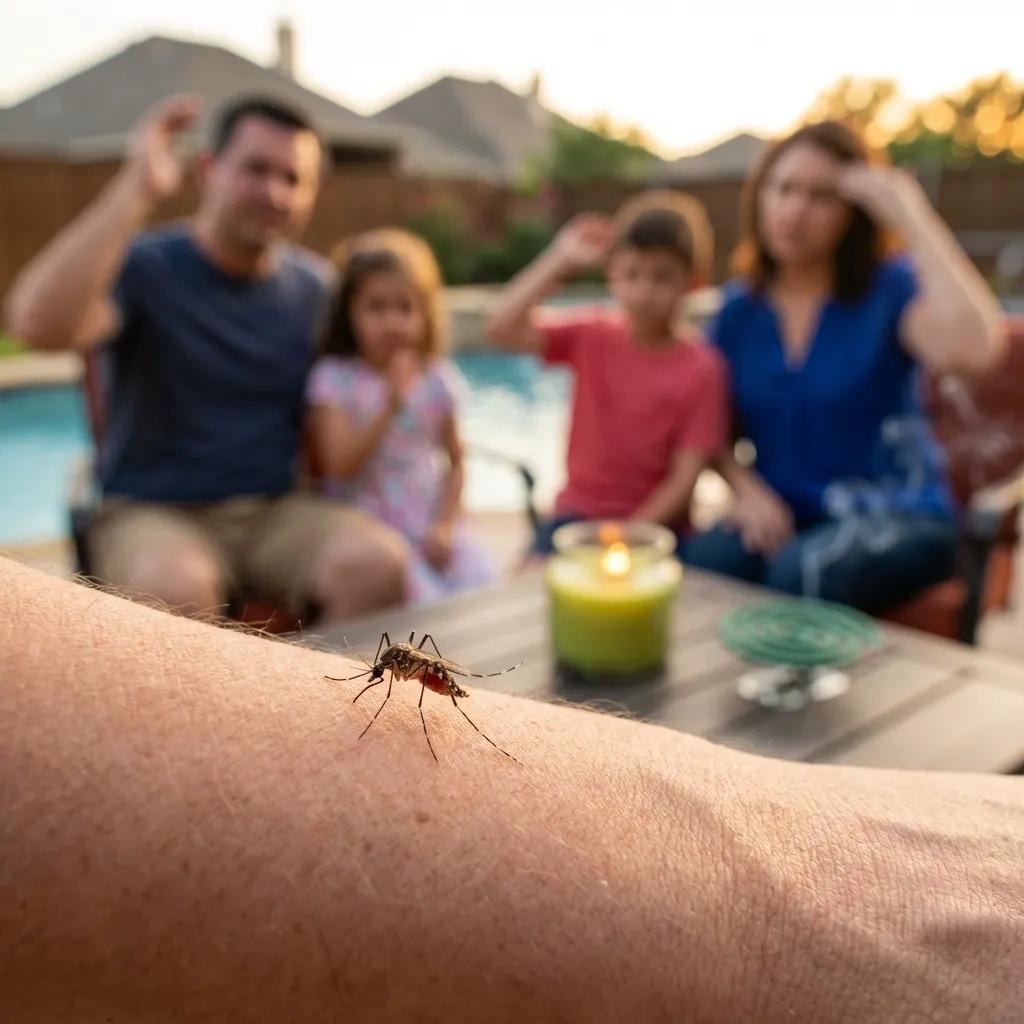
How Long Do Male and Female Mosquitoes Live?
Males and females live different lengths of time because they have different jobs.
Male Mosquito Lifespan
Males generally live about five to seven days, though it varies by species and conditions. Their job as adults is to find females and mate. Males do not take blood meals. They feed on nectar and other plant sugars, and they tend to stay near breeding areas. Because they do not bite, they do not transmit disease through bites.
Female Mosquito Lifespan
Females usually live longer. Many common species survive about two to four weeks as adults, and some live considerably longer in favorable conditions. They need blood meals to get the proteins that eggs require, and depending on the species they feed on humans, birds, or other animals.
A female can lay several batches of eggs in her lifetime. After a blood meal she looks for a place to lay eggs, often near standing water, and she may repeat the cycle several times. That is how a relatively small number of females can drive a growing population.
Understanding the Four Stages of a Mosquito’s Life Cycle
The life cycle has four stages: egg, larva, pupa, and adult. The first three happen in or near water. In warm, favorable conditions, some mosquitoes go from egg to adult in about seven to ten days. Species, temperature, food, and conditions all change that.
1. Egg Stage
The cycle starts when a female lays eggs, either on standing water, on damp soil that may flood later, or individually on the surface. Some species lay clusters called rafts. Under warm conditions certain eggs hatch within days, while others stay dormant for weeks or months until conditions are right. That is how mosquitoes come back after dry spells.
Common places eggs end up:
- Birdbaths and neglected water features
- Plant saucers and flowerpots
- Buckets and outdoor containers
- Clogged gutters
- Old tires and discarded items
- Soil that collects rainwater
Removing standing water can stop eggs from ever becoming larvae.
2. Larval Stage
Larvae, commonly called wigglers, live in water and move with quick, twisting motions. They feed on microorganisms and organic particles and come to the surface to breathe. This stage usually lasts several days, longer in cooler weather or when food is limited. Larvae molt several times as they grow. Because they depend on water, removing standing water is one of the most effective ways to interrupt development.
3. Pupal Stage
Once larvae finish growing they become pupae, sometimes called tumblers for the way they roll when disturbed. Pupae do not feed, but they stay active while wings and legs develop. This stage often lasts one to four days. The adult then emerges at the water’s surface and flies off once its body and wings harden.
4. Adult Stage
Adults mate, feed, and reproduce. Males seek nectar, while females of many species also take blood. Both sexes feed on plant sugars. Adults rest in shade and humidity during the hottest hours, often in dense vegetation, shrubs, tall grass, and under outdoor structures. This is the stage that bothers homeowners and can transmit disease.
What Factors Affect a Mosquito’s Lifespan?
Temperature and Weather
Warm conditions speed up development, so a new generation can emerge faster. Extreme heat and dry air can cut adult survival because mosquitoes lose water, which is why humid, shaded resting spots matter. Cold weather kills some adults, while certain species overwinter as dormant adults or cold-tolerant eggs.
Availability of Standing Water
Without water, mosquitoes cannot finish immature development. Neglected containers, clogged gutters, uncovered water storage, and poorly kept water features give them places to breed. Even small amounts of water can support some species.
Food Availability
Adults need energy from nectar and plant sugars, and females of many species need blood for eggs. Food does not guarantee a long life, but it affects survival and reproduction.
Predators and Natural Threats
Fish, aquatic insects, dragonfly nymphs, spiders, bats, and birds eat mosquitoes or their young. Rain, wind, and temperature swings also take a toll, so many mosquitoes never live long enough to reproduce.
Mosquito Species
Some species finish their life cycle quickly in warm weather. Others survive bad seasons as dormant eggs or adult females. There is no single lifespan that fits every mosquito.
Can Mosquitoes Live Through the Winter?
Some can, depending on the species. Many adults become inactive or die when temperatures drop. Some species overwinter as fertilized adult females in diapause, a dormant state, tucked into basements, garages, hollow trees, or other sheltered spaces. Others survive as eggs that wait for warmth and water. When temperatures rise, survivors become active again, which is one reason mosquitoes return in spring.
In Texas, mild winter stretches can allow mosquito activity outside the usual peak season, so do not assume prevention is over just because it got cold.
How Many Eggs Can a Mosquito Lay During Its Lifetime?
A female can lay hundreds of eggs over her lifetime, depending on species, blood meal access, and conditions. Some lay clusters, others lay singly where water may collect, and after more blood meals she can produce more batches. A small container of rainwater left alone can become a breeding site, and the larvae can mature into adults in days. That is why removing standing water is so important.
Do Mosquitoes Die After Biting Someone?
No. A mosquito does not normally die after biting a person. After feeding she rests while digesting the blood and developing eggs, then can feed again after laying them. This is different from honeybees, whose barbed stingers can stay lodged in skin. A mosquito dies from age, predators, or conditions, not from biting.
Why Mosquitoes Keep Returning to Your Yard
Even if adults are short-lived, new generations keep emerging as long as breeding conditions exist. A yard may hold:
- Standing water in buckets, toys, and containers
- Clogged gutters and drainage areas
- Birdbaths and decorative fountains
- Dense shrubs that provide shaded resting areas
- Low spots where rainwater collects
- Unmaintained water features
Mosquitoes can also fly in from nearby breeding areas, so eliminating one site may not solve the problem. The most effective approach combines source reduction, property maintenance, and a suitable control strategy. For homeowners with recurring problems, Texas Mosquito Control provides mosquito control solutions to help reduce activity around outdoor living spaces.
How Can You Control Mosquitoes Around Your Property?
Control takes more than swatting adults. A consistent plan addresses both breeding and adult activity.
Remove Standing Water Regularly
Inspect for containers and areas that hold water. Empty buckets, clean plant saucers, remove discarded tires, change birdbath water, and keep gutters draining. For water features that cannot be emptied, use appropriate maintenance practices and follow mosquito prevention guidance.
Maintain Your Yard and Landscaping
Trim dense shrubs, clear excess vegetation, and keep outdoor areas tidy. Mosquitoes rest in cool, shaded, humid spots during the day, so opening up airflow makes some areas less appealing. Pay special attention to shade near patios, decks, and outdoor kitchens.
Consider a Professional Mosquito Misting System
For recurring problems, an automated misting system can add a layer of control. Nozzles connect to a pump, reservoir, and programmable controller, and at scheduled intervals the system releases a measured application around selected areas. Learn more about our custom mosquito misting system options and Texas mosquito control system. Dallas homeowners can also review our Dallas mosquito systems and learn what to expect during installation.
Keep Your System Properly Maintained
An installed system needs regular attention: check the reservoir, inspect tubing and nozzles, monitor the controller, and fix leaks. Follow the manufacturer’s maintenance instructions. If you already have a system, visit our service page.
Mosquito Control Services Across the Dallas-Fort Worth Area
Mosquito activity affects homeowners across North Texas, especially in warm, wet periods. Texas Mosquito Control, a family-owned company serving Dallas-Fort Worth since 2003, offers residential mosquito control in these communities:
North Dallas homeowners can also read about mosquito control during Frisco summers. To see what customers say, visit our testimonials page, or contact Texas Mosquito Control to talk about your property.
Frequently Asked Questions About Mosquito Lifespans
How long does a mosquito live indoors?
Several days to weeks, depending on species, food, temperature, and humidity. A female may live longer if she has resting areas and blood meals.
Do mosquitoes live for 24 hours?
No. Adult males often live five to seven days, and females of common species often live several weeks.
What month do mosquitoes die?
There is no single month. Activity drops in cold periods, but some species overwinter as dormant adults or eggs, and in warmer regions like Texas activity can continue through mild stretches.
How long can mosquito eggs survive?
It depends on the species and conditions. Some hatch within days of meeting water, while others stay dormant for weeks or months.
How long does it take for a mosquito to grow from an egg to an adult?
Under warm, favorable conditions, some species take about seven to ten days. Cooler or less favorable conditions slow it down.
Do all mosquitoes bite humans?
No. Only females of certain species take blood meals, and some feed mainly on birds or other animals. Males do not bite people.
Reduce Mosquito Activity by Understanding Their Life Cycle
Most adults live days or weeks, but they reproduce fast enough that populations return whenever breeding conditions exist. Removing standing water, maintaining your landscaping, and considering a professionally designed misting system can help reduce mosquito activity around your property. Ready to talk about it? Contact Texas Mosquito Control and we will help make your outdoor space more comfortable through mosquito season.